
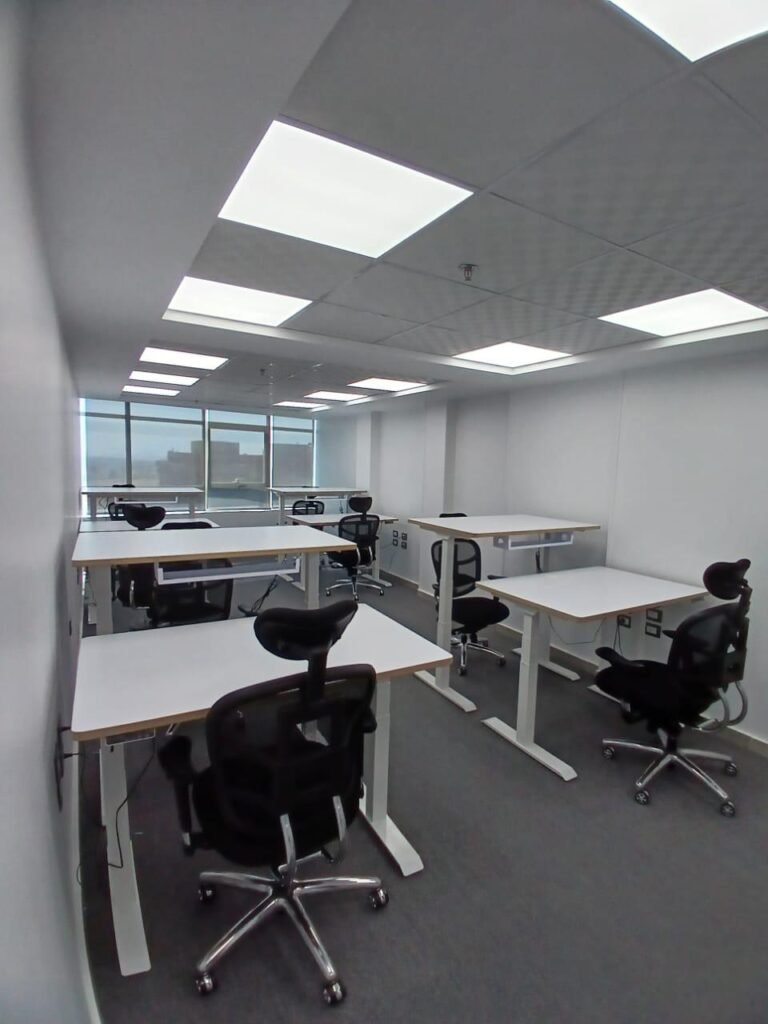
Buying office chairs in bulk in Egypt is a specification and user-fit decision, not just a discount negotiation. Start by grouping job roles, trialling a shortlist at the actual workstations and documenting the accepted configuration. Then compare delivery, maintenance and warranty terms alongside price.
A chair described as ergonomic is not automatically suitable for every employee or task. The practical question is whether the selected model can be adjusted for its intended users and works with the desks, flooring and daily activities in your office. Furniture selection is not a medical assessment or a promise to eliminate discomfort.
Group chairs by use rather than seniority
Task chairs, meeting seating, reception chairs and training chairs serve different patterns. A chair used for continuous computer work needs a different evaluation from one used for occasional visitors. For shared desks or shifts, consider how easily users can reset the settings and how the chair will be maintained between users. Avoid assigning every employee the same configuration simply because a bulk order is easier to count. Standardization is useful when it follows actual needs. Keep a process for exceptions rather than forcing a model that does not fit a particular workstation or user.
Run a trial before ordering the full quantity
Ask representative users to test shortlisted models with the intended desks and equipment. Record observations consistently: can controls be reached, can the chair move under the desk, do the armrests obstruct access and is the adjustment range appropriate? A brief showroom sit is less informative than a structured trial during representative tasks. CCOHS guidance emphasizes adjustability and user testing when selecting office chairs. Use that principle to organize a procurement trial; specialist assessment may be appropriate for individual requirements. Record each model and configuration so the delivered batch can be checked against what was tested.
Use a chair specification that purchasing can verify
| Requirement | Evidence to request | Acceptance check |
|---|---|---|
| Adjustability | Model-specific controls and adjustment ranges | Trial the exact configuration |
| Desk compatibility | Overall dimensions and armrest movement | Test at the intended workstation |
| Floor compatibility | Suitable caster options and guidance | Confirm the actual floor surface |
| Use conditions | Manufacturer’s intended use and limits | Match the workplace brief |
| Maintenance | Parts, care guidance and support route | Confirm what can be serviced |
| Warranty | Written coverage and exclusions | Match the final order documents |
Do not treat a photograph, a mesh back or a high backrest as proof of all these requirements. Ask for documentation for the proposed model, including any available test reports relevant to the claimed specification. Avoid accepting a certification claim that cannot be tied to the exact product.
Compare mesh, upholstery and mechanisms in context
Material choice should reflect use, cleaning arrangements, appearance and repairability. Ask which surfaces can be cleaned with the products used by your facilities team. Review moving parts, controls and the availability of replacement components. A sample should use the same fabric and mechanism as the order, not a premium showroom version. For a multi-branch purchase, record finish references and component options. Different batches can look similar while using different parts. Agree how substitutions will be reviewed and whether a later replacement can remain compatible with the original order.
Plan quantities and a manageable exception process
Calculate operational seats separately from meeting, visitor and spare requirements. A spare pool may be useful, but its size should follow headcount, servicing arrangements and the time needed for replacements. Avoid adding a fixed percentage without understanding these factors. In an illustrative 60-person rollout, a project team might test two task-chair configurations and one meeting-chair option before confirming quantities. The correct mix comes from the trial and approved needs; the example is not a FlakeTech client result or a universal seat ratio.
Compare the full cost of ownership
Separate unit price from delivery, assembly, removal of packaging, on-site adjustments and any later service visits. Ask whether labour, transport and replacement components are covered under the proposed warranty. Confirm how a damaged delivery or a malfunctioning mechanism will be reported and handled. A longer headline warranty is not necessarily broader coverage. Request the written terms for the specific model and order. Do not calculate an assumed productivity gain or health saving to justify a purchase without evidence from your own workplace.
Check the delivered batch and support users
Count chairs by model and configuration, inspect visible damage and verify assembly and mechanisms against the agreed instructions. Keep an issue log with the location and relevant order reference. Provide users with the manufacturer’s adjustment guidance and tell them how to report a problem. Retain product codes and care information for facilities teams. Schedule checks according to manufacturer guidance and workplace use; do not wait until a chair fails to discover that nobody knows which component was supplied.
Request a company seating proposal
Explore the office chair catalogue and coordinate the choice with your desks and workstations. FlakeTech Business can discuss project quantities, proposed configurations and delivery requirements. Send your seating brief with job groups, locations, desks and your target installation window.
Frequently asked questions
Does “ergonomic” mean one chair suits everyone?
No. Evaluate the intended users, tasks, adjustment range and workstation. Keep a route for individual requirements.
Should mesh chairs always be preferred?
No. Compare the exact model, cleaning, use conditions, comfort during a trial and maintenance options rather than choosing by material label alone.
Can we use one chair model across several branches?
Possibly, after confirming user needs and site compatibility. Document the approved configuration and how exceptions or substitutions will be handled.
What should we check before accepting the order?
Quantities, model codes, configuration, visible condition, assembly, adjustment functions, support information and written warranty terms.
Further reading
CCOHS: selecting and trialling an ergonomic chair. This guidance supports the selection process; it does not certify any FlakeTech product.